
Bark Yarn · Blog
What is polyester fibre? Properties and applications
Polyester, staple fibres and filaments: a guide to assessing moisture, care and performance expectations in blended yarns.
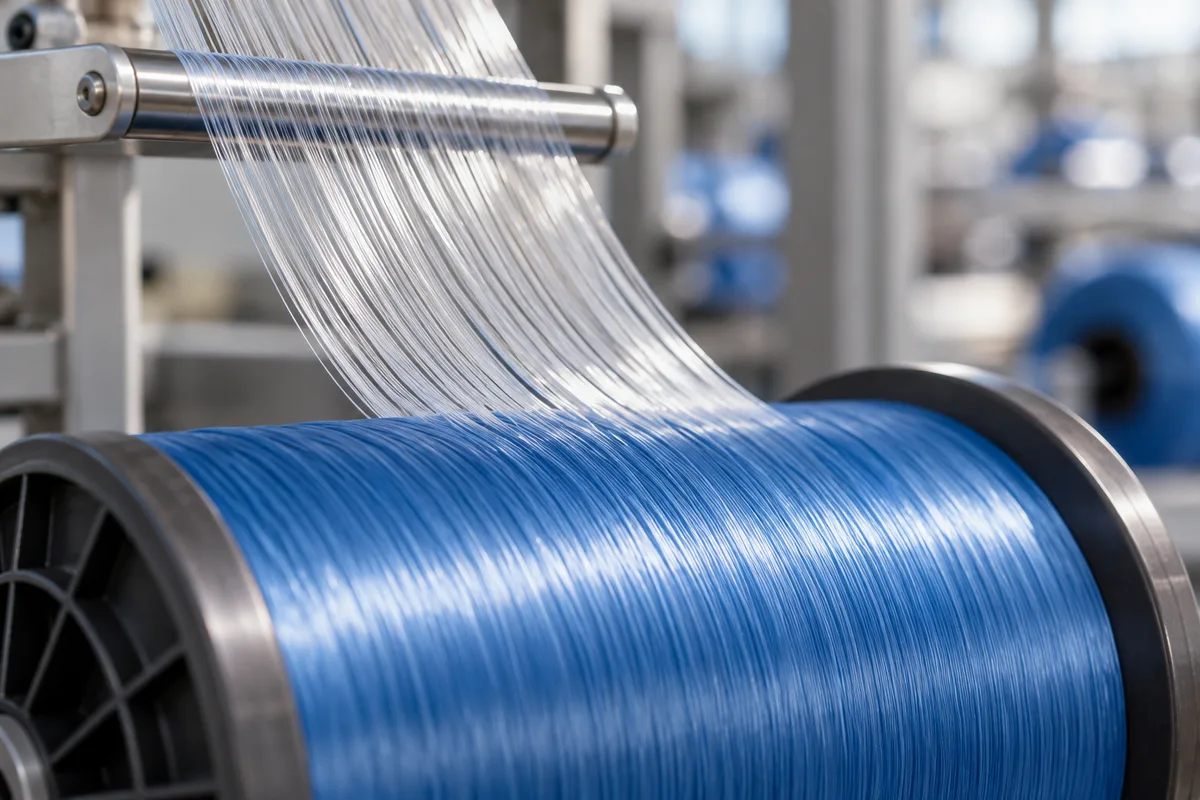
What kind of fibre is polyester?
Polyester is a family of synthetic fibres; PET-based polyester is widely used in textiles. It can be used as continuous filament or cut into staple fibre. ‘Polyester yarn’ therefore does not describe a single surface, thickness or manufacturing method. It is used on its own or in blends for clothing and various technical applications.
Moisture and care expectations
Polyester tends to absorb less moisture into the fibre than cotton or wool. However, a fabric’s ability to transport perspiration across its surface depends on fibre cross-section, yarn and knit structure, and applied treatments. Low moisture absorption is not the same as waterproofness. Composition percentages alone do not determine a product’s comfort or drying time.
Assessing a blended yarn
The purpose of the blend should be clear in the quotation: appearance, durability in use, care requirements or cost balance. Samples can be evaluated for dimensions after washing, surface appearance, handle and end-use tests together. Processing temperatures and care conditions must come from the product specification; one temperature should not be recommended for all polyester products.
Questions to ask when sourcing
Is the yarn made from filament or staple fibre? What are the blend percentages and yarn count? If recycled content is claimed, which documentation verifies it? Share your project requirements with Bark Yarn to discuss suitable blends. This article is informational; it does not declare that all polyester types are stocked by Bark or carry any particular environmental certification.