Bark Yarn · Blog
Cupro, acetate and bamboo: distinguishing cellulosic fibre names
Differences between cupro, acetate, triacetate and bamboo viscose: reading fibre descriptions correctly for linings and clothing textiles.
What is cupro?
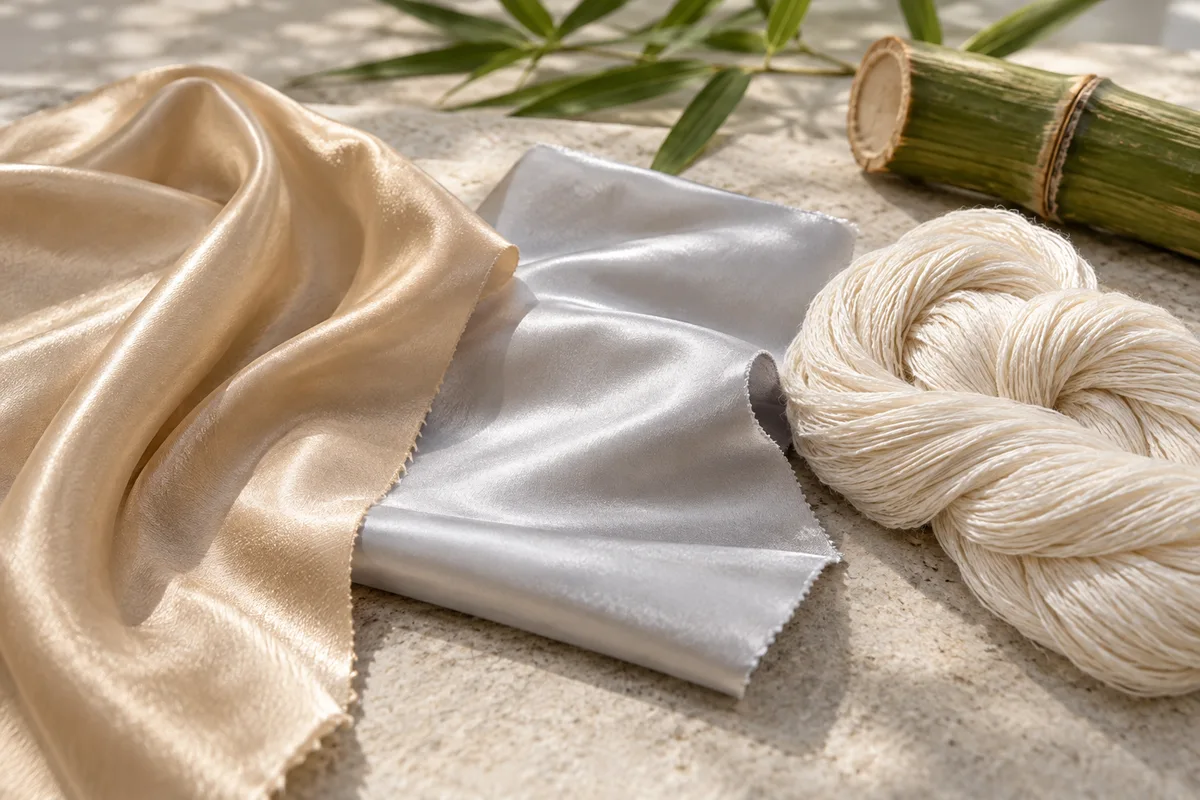
Cupro is a regenerated cellulose-based fibre. Cotton linters—the short fibres left on the seed—can be used in its production. Bemberg™ branded cupro is one example. Cupro is not another name for cotton: it has been processed and re-formed into fibre and is used in clothing and lining fabrics.
Do acetate and triacetate belong to the same group?
Acetate and triacetate are produced from chemical derivatives of cellulose. Their structure is not identical to regenerated cellulose fibres such as viscose or modal. Expectations for lustre, drape and heat response should be discussed for the product type; lining selection should not rely on a surface photograph alone.
What should you ask if it says bamboo?
The word ‘bamboo’ sometimes describes the source plant. If viscose is produced from bamboo cellulose, the final fibre is not the same as mechanically separated bamboo fibre. Request the full fibre designation and blend percentages from the supplier. Do not assume natural antibacterial properties or specific health benefits from the source plant’s name.
Match the label to the sample file
For lining fabrics, test compatibility with the outer fabric, seam appearance and care conditions together. Keep the incoming material’s technical specification with the sample code. Verify environmental or brand claims against documentation for the particular product rather than generalising them to every product in a fibre family. This article supports material literacy; it is not a Bark stock list.