
Bark Yarn · Blog
What is silk fibre? Silk yarn and wool blends
The origin of silk, filament versus spun yarn, and considerations for wool–silk blends and fine knitwear design.
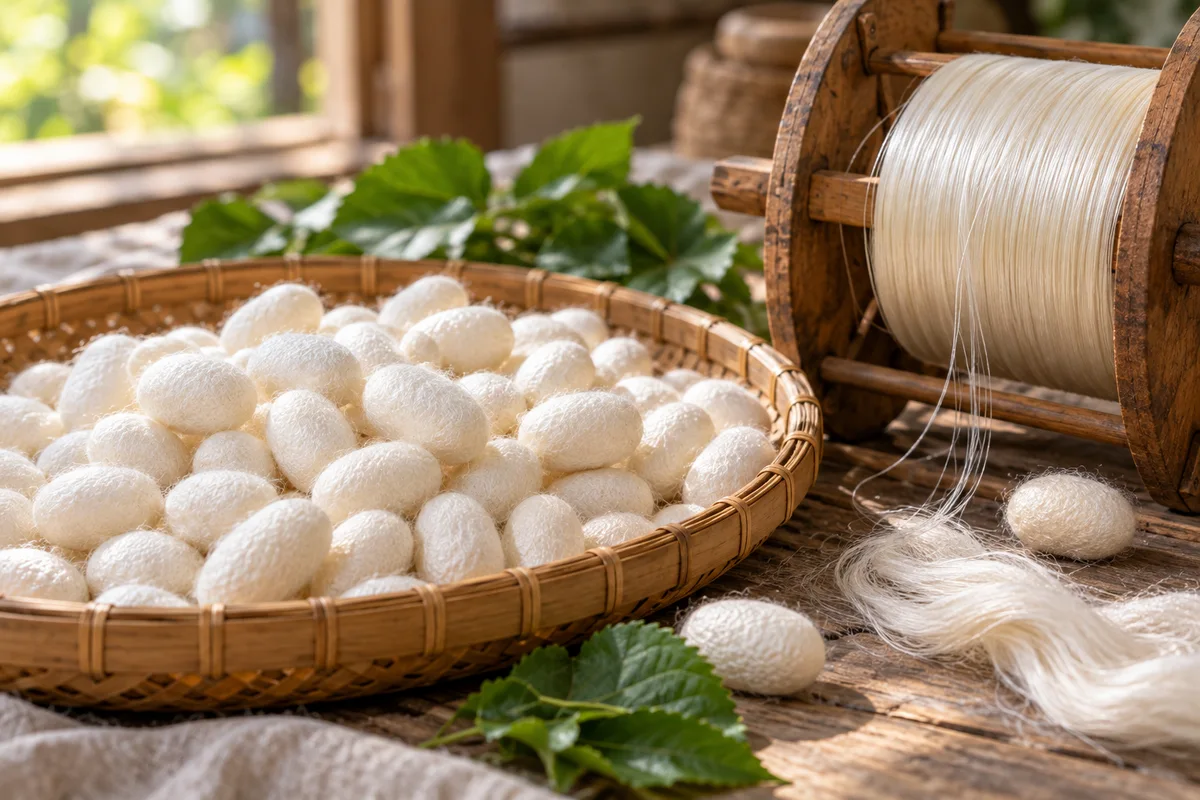
A natural fibre from the cocoon
Silk is a natural protein fibre produced by silkworms as they form their cocoons. Mulberry silk is common; other types include eri, tasar and muga. Commercial documentation may specify the yarn structure and, where applicable, silk type rather than simply stating ‘silk’.
Filament, spun yarn and appearance
Long filaments and yarn spun from staple fibres do not produce the same surface. Silk is valued for natural lustre and drape, but the final appearance varies with twist, fabric structure and finishing. Satin is a weave structure: a satin-like appearance does not prove a fabric is silk.
Designing a wool–silk blend
Requesting a ‘silky handle’ without specifying blend percentages is ambiguous. Use a sample to show whether the design calls for lustre, fluidity or cleaner stitch definition. When comparing two blends in the same design, record count, weight and stitch density so that you can track which variable accounts for the difference.
Care and sample acceptance
For fine knitwear and accessory samples, check surface snagging, seam appearance and measurements after the intended care process. Do not infer care instructions from the fibre name. Match fibre percentages, origin and product claims to supplier technical documentation. This educational content does not mean that every silk type is stocked by Bark.