
Bark Yarn · Blog
What is lyocell? A comparison with viscose and modal
Lyocell fibre and yarn properties: cellulose dissolution, moisture management, surface behaviour and the basics of choosing knitted fabrics.
How is lyocell made?
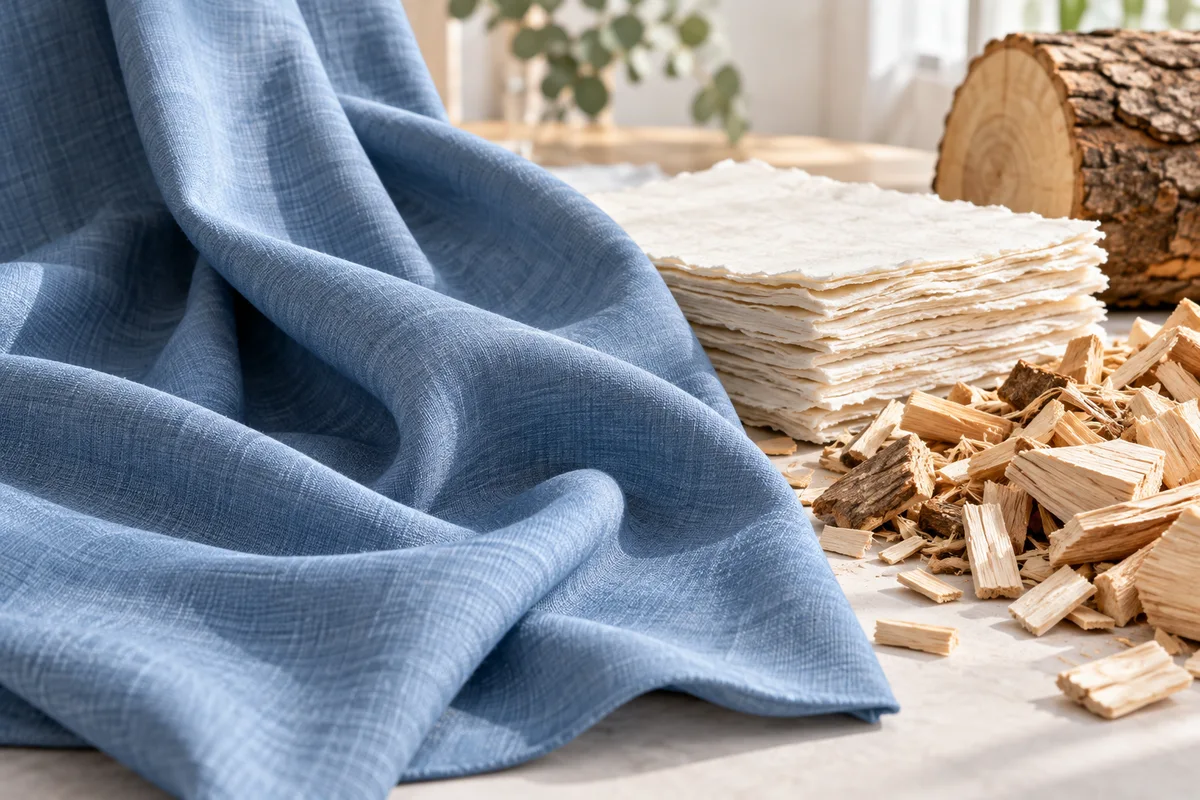
Lyocell is made by dissolving cellulose directly in a solvent system and re-forming it into fibre. It shares a cellulosic structure with viscose and modal, but the manufacturing method differs. Solvent recovery is an important part of this process; however, the environmental performance of a specific product must be assessed using supply-chain data.
Strength, moisture and surface
Lyocell is used in clothing fabrics for its moisture absorption and strength. In some fibre types, surface fibrillation—the emergence of fine fibrils on the surface—is a processing-related design consideration. Not every lyocell quality should be assumed to produce the same surface.
What to look for in samples
Clearly specify the desired surface in the yarn or knitted-fabric enquiry: do you want a clean, smooth surface or a more peach-like handle? Evaluate the sample through the intended dyeing and finishing sequence. Record appearance, dimensions, seam behaviour and handle after washing; do not make first-touch softness the only acceptance criterion.
Branded fibres and blend information
Some lyocell products are sold under the TENCEL™ name; lyocell itself is the generic fibre name. Match brand claims to supplier documentation. When developing blends with cotton, wool or other fibres, check that percentages add up and verify final care instructions. The definition in this blog does not mean that a particular Bark quality contains lyocell.