
Bark Yarn · Blog
A guide to fibres: natural, cellulosic and synthetic
How do wool, cotton, modal, viscose, lyocell, polyester and other fibres differ? A comparison of the main fibre families for yarn and knitwear selection.
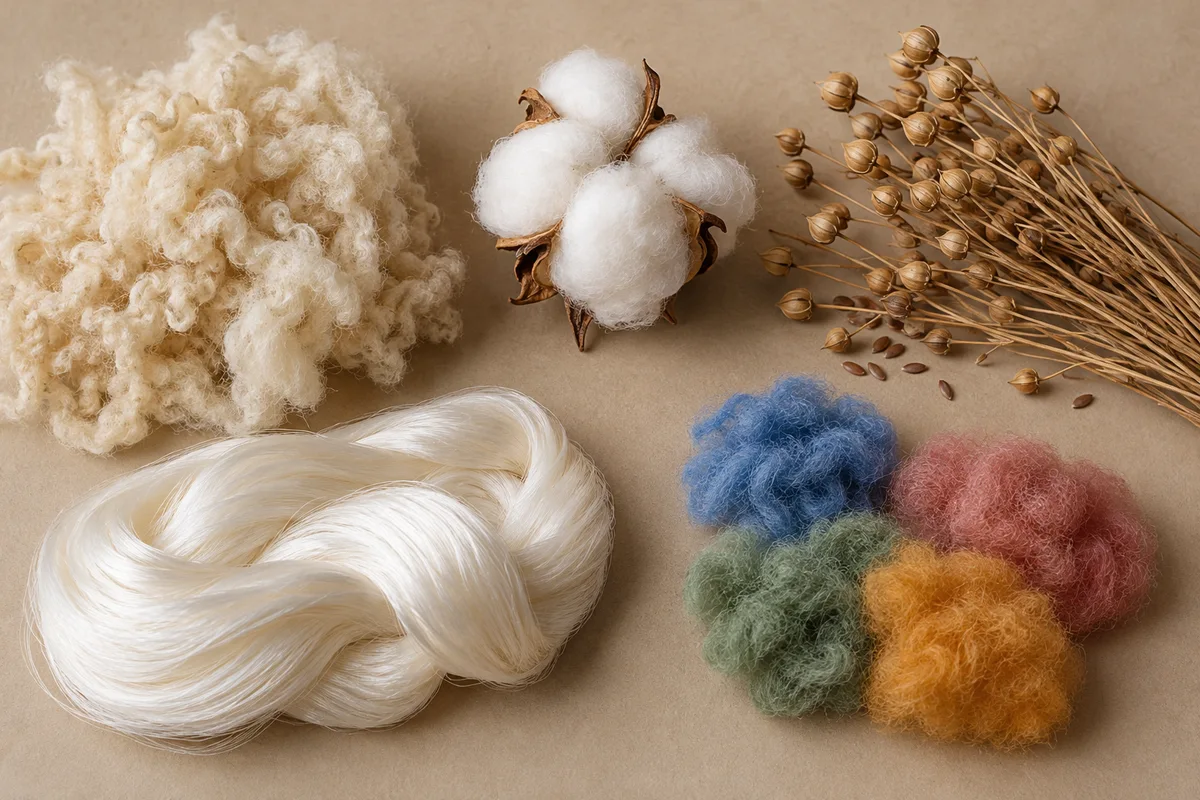
Natural animal fibres
Fibre is the basic material of yarn; its origin and the yarn manufacturing method are separate pieces of information. Sheep’s wool, cashmere, alpaca, mohair and silk are animal fibres. Merino and lambswool describe different aspects of wool, whereas woollen and worsted refer to spinning systems. Angora rabbit fibre must not be confused with mohair from the Angora goat. Camel, yak, llama and vicuña are among the more specialised animal fibres.
Fibres from plants
Cotton comes from fibres around the seed; flax and hemp come from plant stems. Ramie, jute, kenaf, sisal, abaca and coir are also plant-derived. They are not all selected for the same uses as sweater yarn: clothing, home textiles, ropes, packaging and technical applications have different requirements.
Cotton properties and the flax–hemp guide discuss their selection criteria separately.
Two main families of man-made fibres
Viscose, modal, lyocell and cupro belong to the regenerated group, in which cellulose is processed and re-formed into fibre. Acetate and triacetate are cellulose derivatives. Polyester, polyamide/nylon, acrylic, elastane and polypropylene are synthetic fibres. Technical fibres such as carbon and glass are also used in textile engineering; they are not assessed against the same expectations as everyday knitwear fibres.
From label to sample: making comparisons
First define skin contact, season and care expectations. Then assess blend percentages, yarn count, ply, stitch density, weight, pilling and dimensional change together. A fibre name alone is not enough to call a product ‘the warmest’, ‘the most durable’ or ‘environmentally friendly’.
This guide introduces the main, common families; it is not a stock list covering every speciality commercial fibre. Quality and supply suitability for Bark Yarn are confirmed through sampling.