Bark Yarn · Blog
What is modal fibre? Differences from cotton and viscose
Modal yarn and fabric: regenerated cellulose, softness, wet strength, cotton blends and points to consider in knitwear samples.
What kind of fibre is modal?
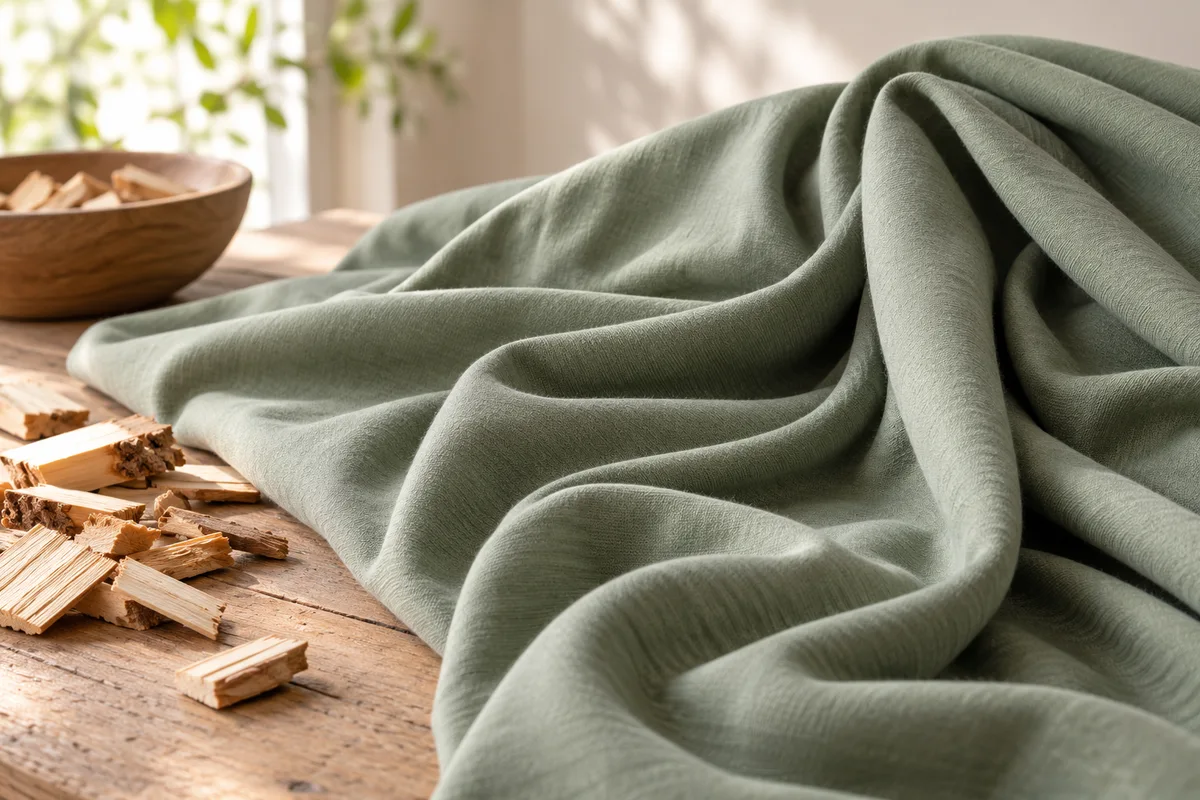
Modal is a regenerated cellulose-based fibre. It belongs to the viscose family and is produced using an approach that improves strength and dimensional behaviour, particularly when wet. Unlike cotton, it is not collected directly from a plant as fibre; cellulose is dissolved and re-formed into fibre. Natural cotton and modal are therefore not the same material.
Softness and moisture behaviour
Modal is used in clothing for its soft surface and moisture absorption. However, a fabric’s feel against the skin depends not only on the fibre but also on yarn twist, knitting and finishing. Two fabrics labelled modal should not be expected to have the same thickness or stretch.
Choosing a cotton–modal blend
Record the blend percentage in the technical specification for a T-shirt or fine knitwear project. Check target weight, opacity and measurements after washing on the same sample. Supporting a request for a cotton-like appearance with more fluidity with an approved fabric sample is more measurable than ordering by fibre name alone.
Brand names and care are different matters
TENCEL™ Modal is a branded fibre family; not every modal yarn automatically carries this brand or the same documentation. Manufacturer-specific environmental claims require supporting supply documentation. Establish care instructions for the final product; modal content alone does not guarantee freedom from shrinkage or pilling.