Bark Yarn · Blog
Polyamide (nylon) yarn: why is it used in wool socks?
Are polyamide and nylon the same? A practical guide to wool–nylon sock yarn, filaments versus staple fibres, durability targets and sample tests.
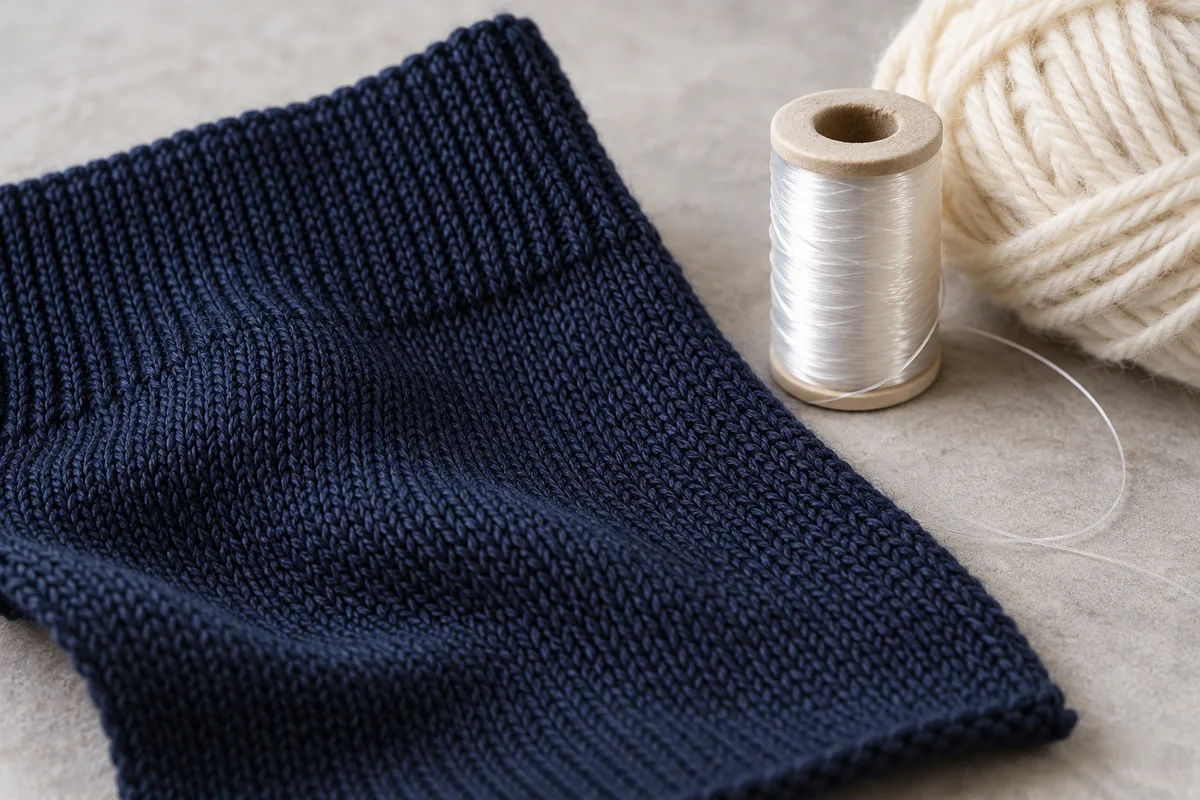
The names polyamide and nylon
Nylon is the common textile name for polyamide fibres. PA 6 and PA 6.6 are well-known types. The fibre can be used as filament or cut and spun with other staple fibres. This structural difference cannot be determined from blend percentages alone and should be clarified in the quotation.
Its role in wool sock yarn
Polyamide is considered for clothing and sock applications where durability is required. There is no single universal ratio for achieving the desired result in a wool–nylon blend. Usage intensity, sock construction and manufacturing method must be assessed together. Do not apply one fibre percentage automatically to every sock design.
Setting up a useful trial
When comparing two yarns in the same sock design, record count, ply, stitch density and finished weight. Assess high-stress areas such as heels and toes separately. Supplement dimensional and surface checks after washing with abrasion tests appropriate to the target market, and retain results with batch details.
Do not confuse it with elastane
Polyamide and elastane are not the same fibre. Durability and stretch–recovery requirements should be specified separately. When requesting wool-blend sock yarn from Bark Yarn, share fibre percentages, yarn count, ply and machine information. Use a physical shade card and production sample rather than approving colour digitally.